Fungi worldwide

New species

Fungi newly described for science: where they were found, who described them and where the publication is. With identifiers and a source link.

entries
23
illustrated
23
with sources
23

23 descriptionseach with a DOI to the source publication

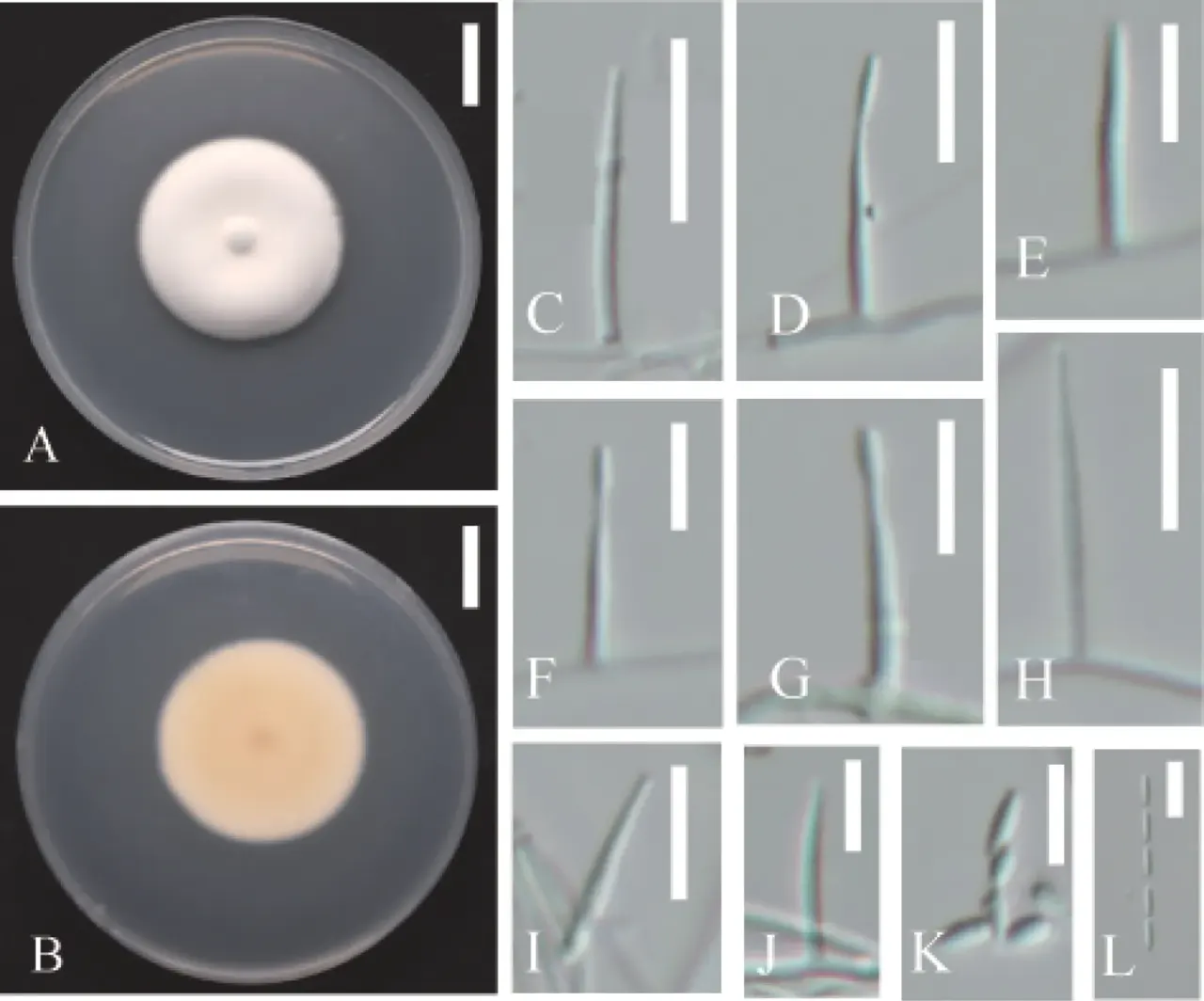
Ascopolyporus sinensis on an insect-killing fungus

Ascopolyporus sinensis

Z.Q. Wang & Y.B. Wang, 2026

Ascopolyporus sinensis on an insect-killing fungus

In Yunnan the new species was found in association with Metacordyceps puerensis on the undersides of living dicot leaves.

Publication
Three new species in Cordycipitaceae and Clavicipitaceae (Hypocreales, Ascomycota) from Yunnan, China
Habitat
The underside of living dicot leaves in the humid surroundings of Pu’er, Yunnan.
Host
Associated with Metacordyceps puerensis, which parasitises an insect.
Etymology
The epithet sinensis points to China, the country the type material came from.
Conservation
Not assessed — described in 2026.
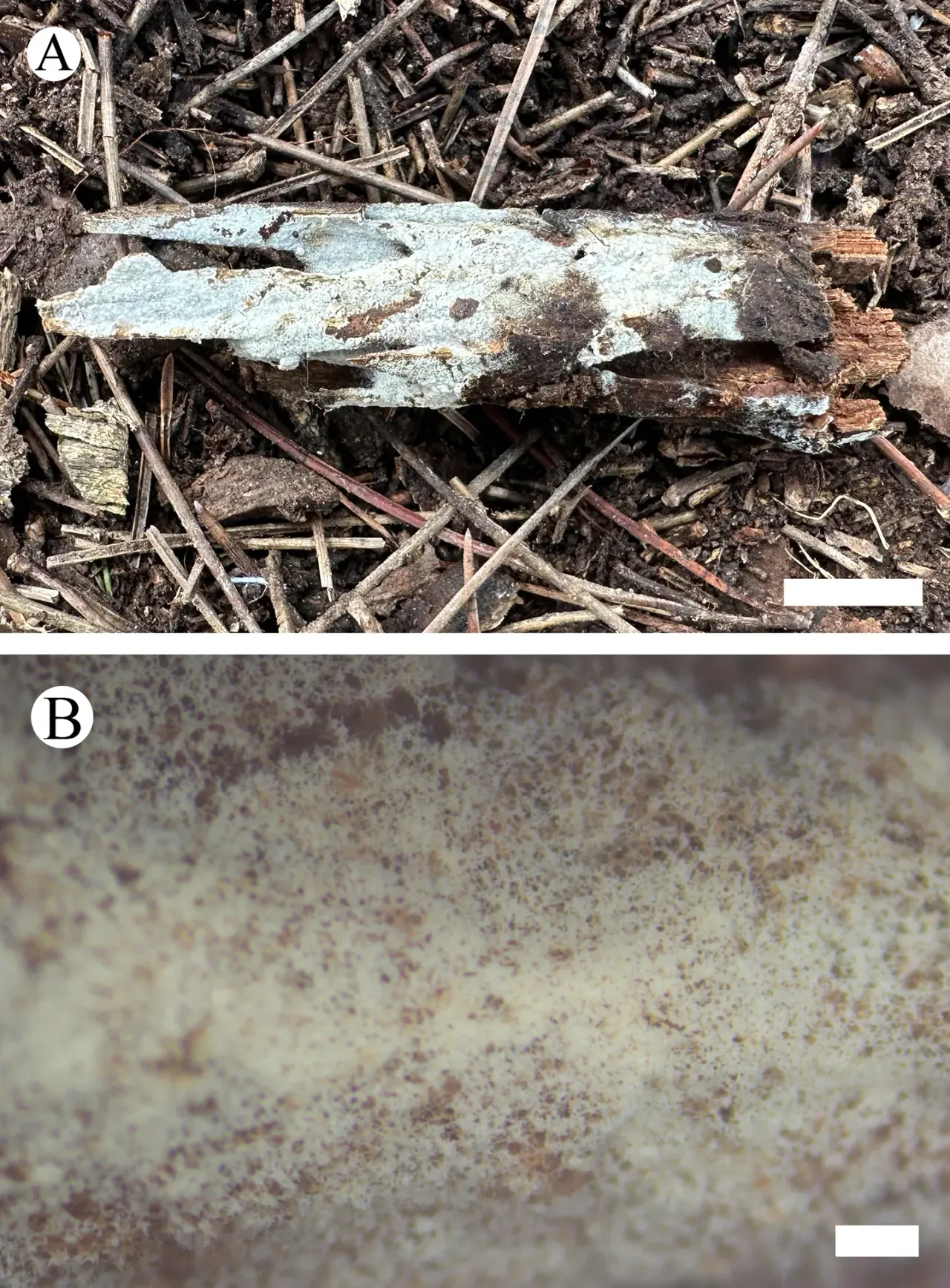
Botryobasidium massonianae on pine wood

Botryobasidium massonianae

K.Y. Luo, Y.C. Dai, Yuan Yuan & Y.D. Wu, 2026

Botryobasidium massonianae on pine wood

A resupinate fungus colonised the dead wood of Pinus massoniana; the description rests on morphology and on ITS and nLSU sequences.

Publication
Three new species of Cantharellales and Hymenochaetales from Pinus massoniana in China
Habitat
Dead pine wood in China; a thin, spread-out fruit body on the surface of the substrate.
Host
Pinus massoniana — a known substrate, with no confirmed strict specialisation.
Etymology
The epithet refers to Pinus massoniana, on whose wood the type was collected.
Conservation
Not assessed — described in 2026.
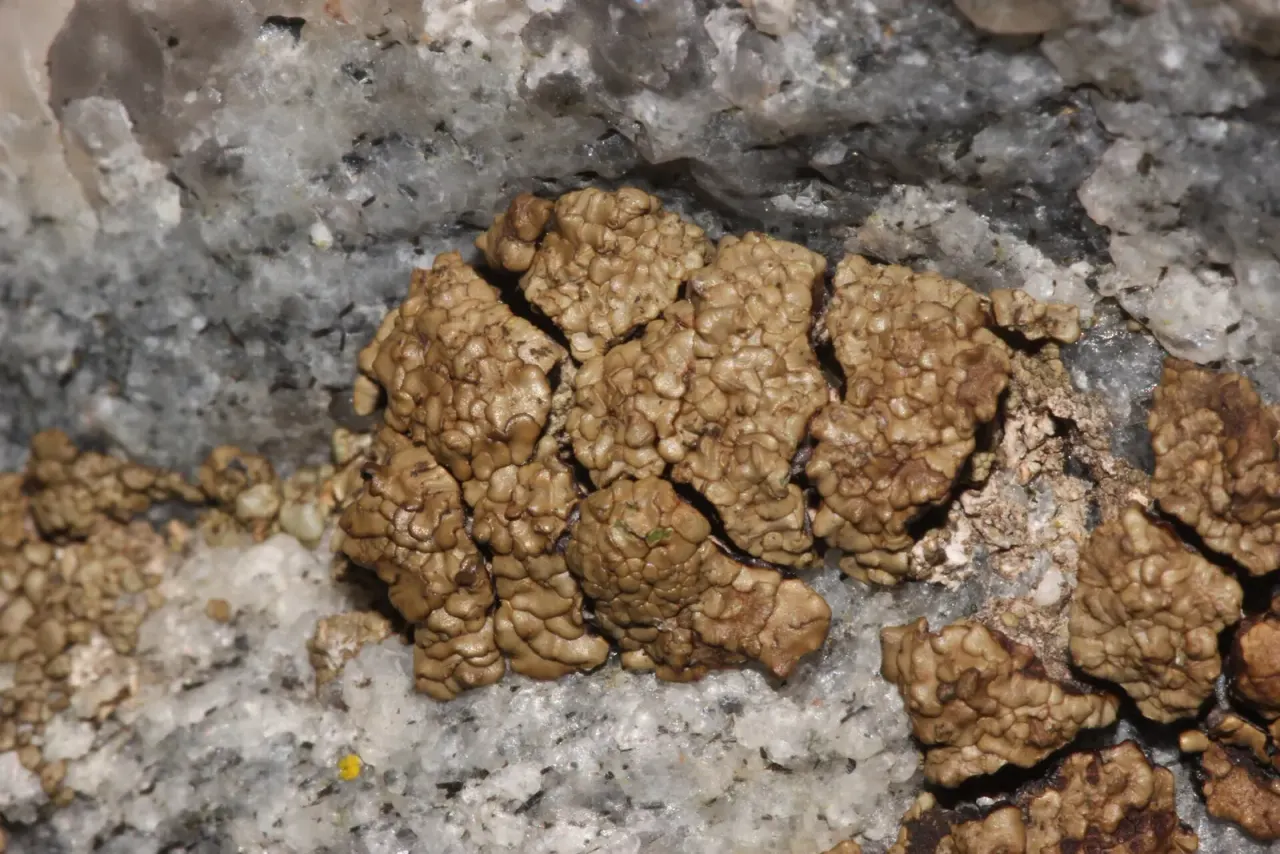
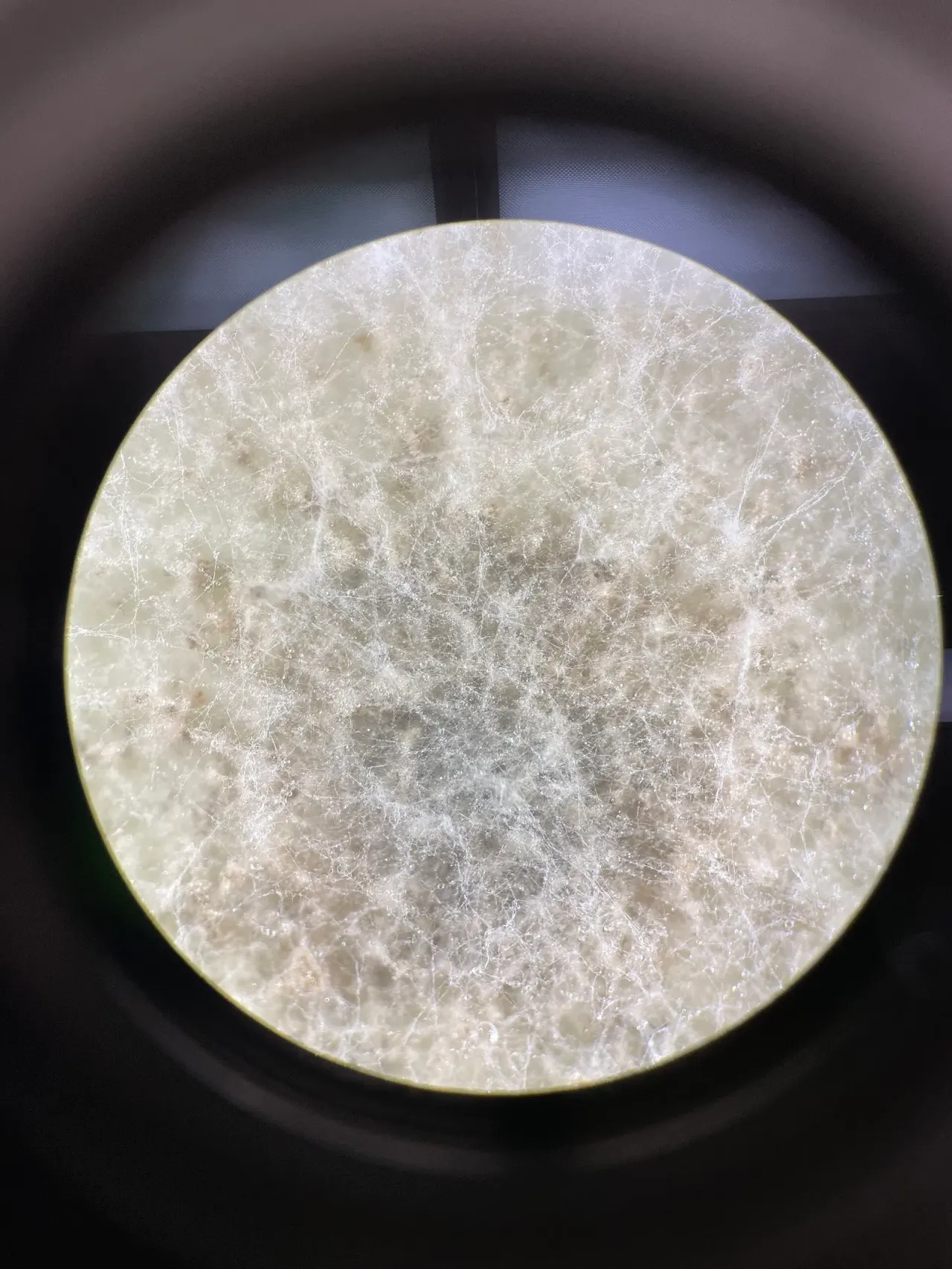
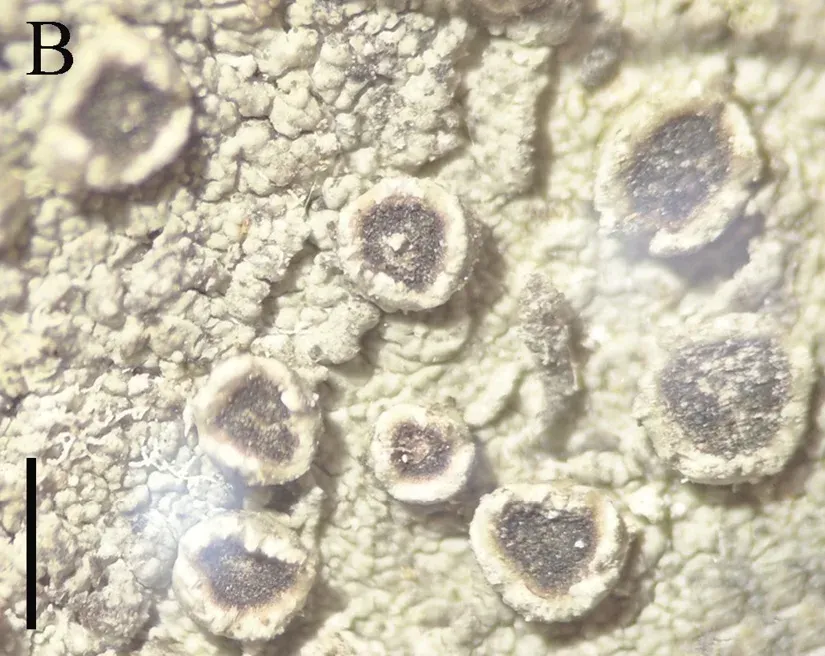
Chicitaea yueliangshanensis thallus with black fruiting discs

Chicitaea yueliangshanensis

Wei Wu & Shao-Bin Fu, 2026

Chicitaea yueliangshanensis: a new lichen hidden on bark

Described in February 2026, this Guizhou lichen has tiny black fruiting bodies. Its recognition combined anatomy, thallus chemistry and DNA evidence rather than appearance alone.

Publication
He L-Z et al. (2026). MycoKeys 128: 73–96.
Habitat
Tree bark in Yueliangshan Nature Reserve, Congjiang County, Guizhou, China; the type was collected at 959 m elevation.
Etymology
The name refers to Yueliangshan Nature Reserve, where the holotype was collected.
Conservation
The description does not include a formal extinction-risk assessment.
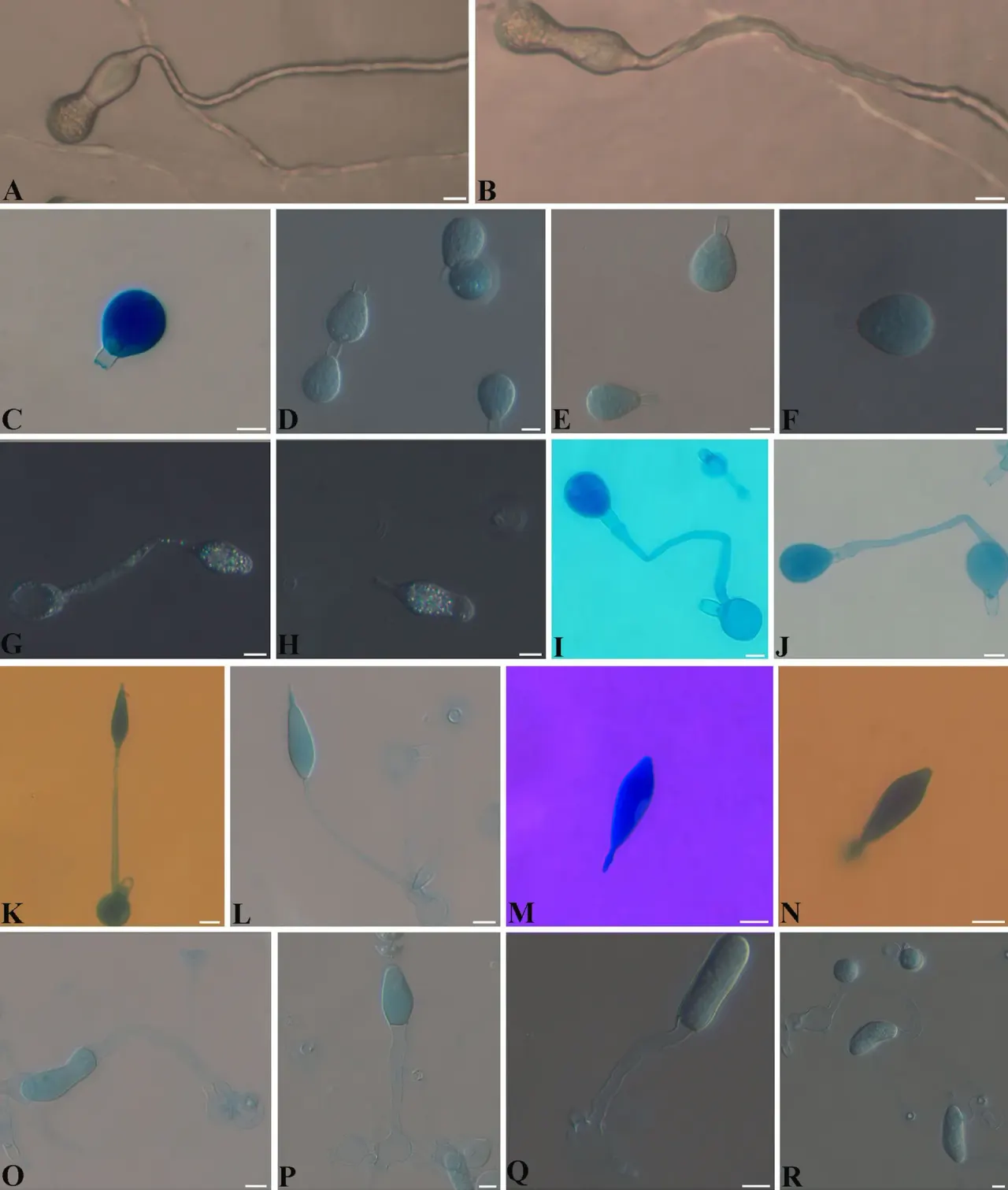
Drechslerosporium cornellii — a new genus

Drechslerosporium cornellii

B. Huang & Y. Nie, 2026

Drechslerosporium cornellii — a new genus

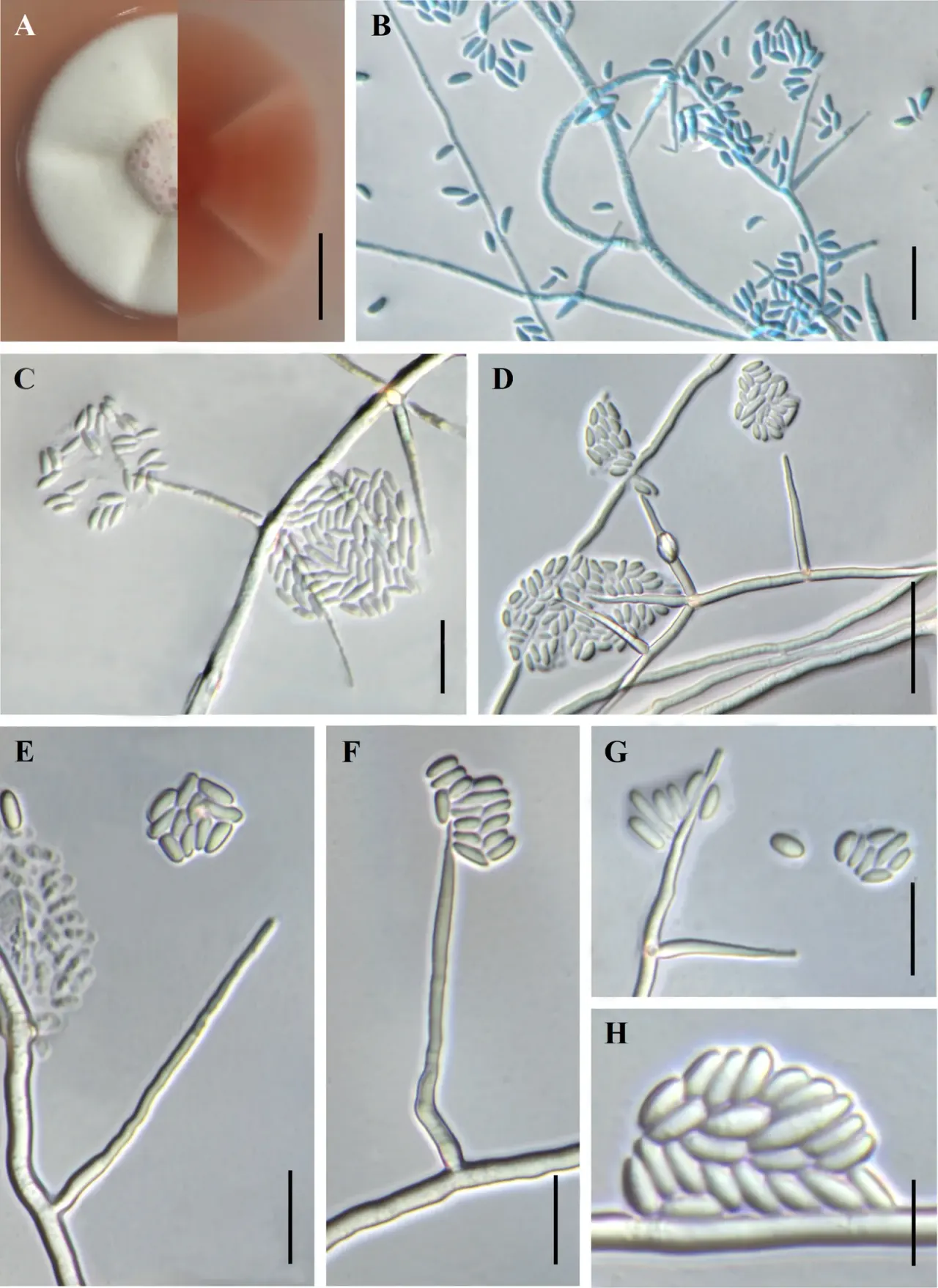
An isolate from decaying plant litter discharges its conidia in an unusual way and forms finger-like chlamydospores.

Publication
Drechslerosporium cornellii gen. et sp. nov. within the Basidiobolaceae
Habitat
Decaying plant debris in the Muriel B. Mundy Wildflower Garden, Ithaca; culture ARSEF 7942.
Etymology
The name honours Ezra Cornell, the founder of Cornell University.
Conservation
Not assessed — known from the material used in the 2026 description.
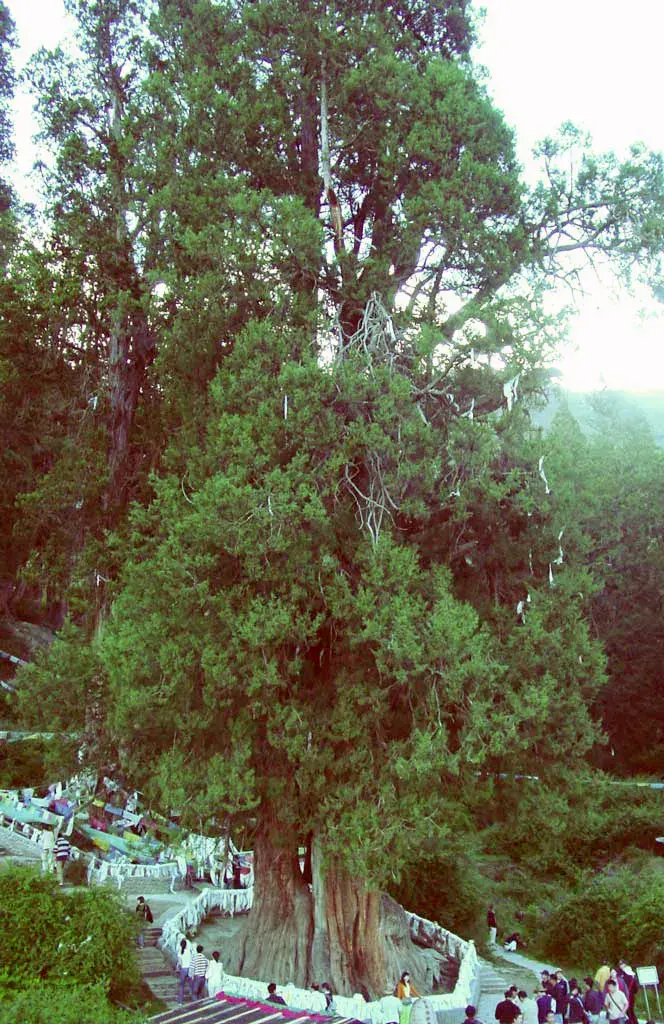
Fungi inside healthy tissue of high-altitude trees

Parafenestella cupressicola, P. xizangensis

Pang, Wu, Liang i in., 2026

Fungi inside healthy tissue of high-altitude trees

Two new Parafenestella species were isolated from asymptomatic tissue of a Tibetan cypress and a rose. Endophytes live in a plant without harming it.

Publication
MycoKeys 137: 69-80
Habitat
Asymptomatic tissue of trees and shrubs in high-altitude forests of Xizang.
Host
Cupressus gigantea, Rosa sericea.
Etymology
cupressicola — dwelling on cypress; xizangensis — from the name of Xizang.
Lasiodiplodia carlesii — a new canker pathogen

Lasiodiplodia carlesii

Zhang, Feng, Jiang i in., 2026

Lasiodiplodia carlesii — a new canker pathogen

A new pathogen described after a disease outbreak in Chinese Castanopsis plantations. Tests confirmed it also attacks another plant family.

Publication
MycoKeys 137: 81-102
Habitat
Diseased tissue of trees in Castanopsis plantations in China.
Host
Castanopsis carlesii, C. hystrix, C. faberi; fruits of Syzygium samarangense.
Etymology
The epithet comes from the host, Castanopsis carlesii.
Leptobacillium doupengense from a tree hollow

Leptobacillium doupengense

W.K. Lin, L.L. Lou, X. Zou & Y.M. Zhou, 2026

Leptobacillium doupengense from a tree hollow

The species was isolated from humus-rich material that had accumulated in a tree hollow in the karst landscape of Guizhou.

Publication
Two new species from tree-hole humus in Guizhou Province, China: Leptobacillium doupengense (Hypocreales, Cordycipitaceae) and Metapochonia doupengshanensis (Hypocreales, Clavicipitaceae)
Habitat
Rotten material in a tree hollow in the karst Doupengshan Scenic Area, Duyun, Guizhou.
Host
Not established; the species was isolated from the rotten material of a tree hollow.
Etymology
The name comes from the Doupengshan area, where the sample was taken.
Conservation
Not assessed — described in 2026.
Marcelleina evangelinae — a violet cup from Sonora

Marcelleina evangelinae

Raymundo, Sánchez-Flores, Alv.-Cortés & Esqueda, 2026

Marcelleina evangelinae — a violet cup from Sonora

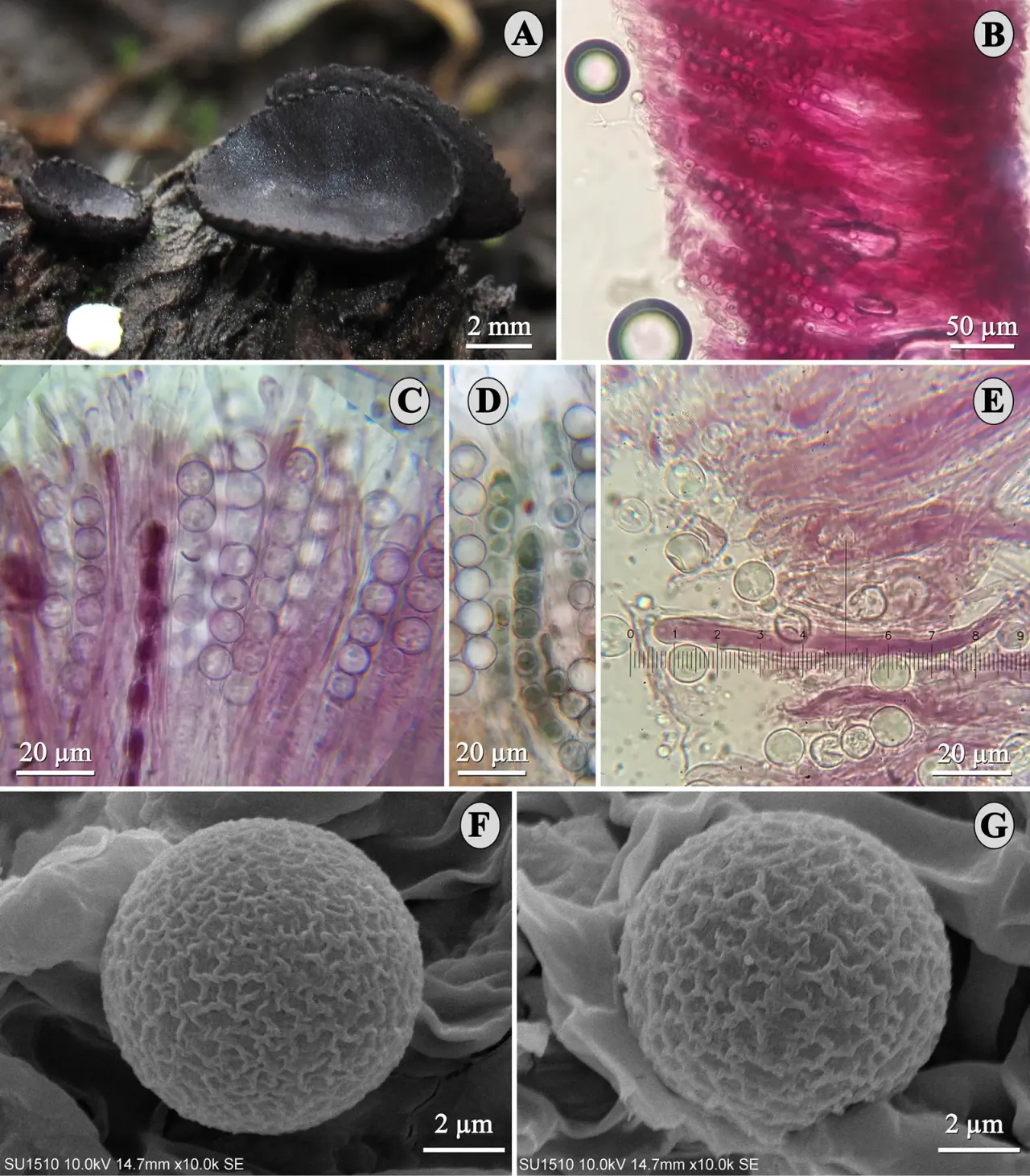
The new species was distinguished by dark violet apothecia, reticulate spores, histochemistry and analysis of its DNA sequences.

Publication
Two new purplish species of Pezizales from the temperate forests of Mexico
Habitat
Mixed forest of the Sierra Madre Occidental in Sonora, 1,297 m; small apothecia on decaying substrate.
Etymology
The name honours Dr Evangelina Pérez-Silva.
Conservation
Not assessed — known from the material used in the 2026 description.
Micropsalliota latiumbonata from monsoon Oman

Micropsalliota latiumbonata

S. Hussain, Al-Nadabi & Al-Sadi, 2026

Micropsalliota latiumbonata from monsoon Oman

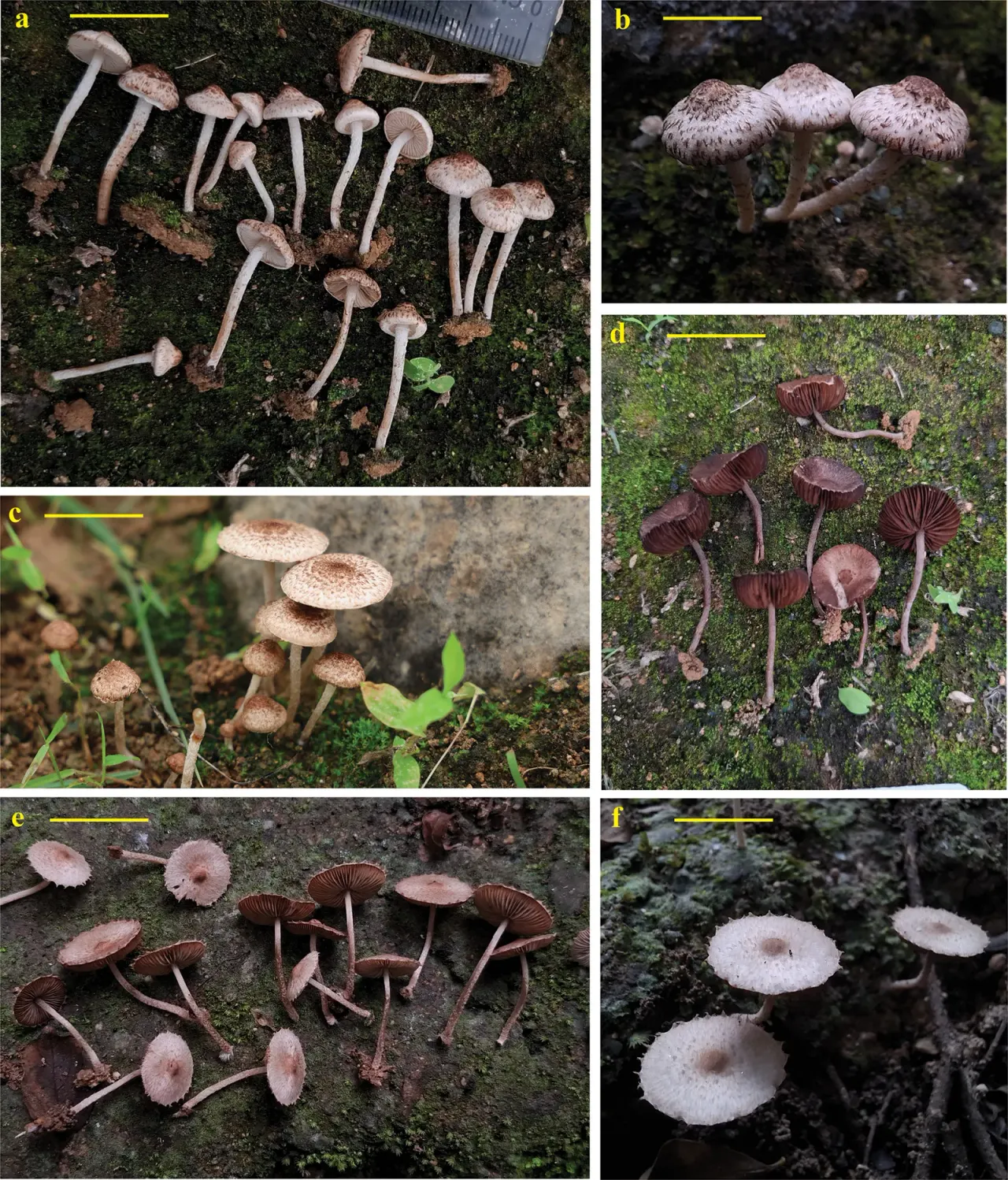
A small saprotroph grew in groups beside termite mounds in the seasonally humid Dhofar region of southern Oman.

Publication
Morphology and multigene phylogeny reveal two new species of Micropsalliota (Agaricaceae, Basidiomycota) from Dhofar region, southern Oman
Habitat
Soil around termite mounds in the seasonally humid Dhofar region of southern Oman.
Host
No confirmed host; the fruit bodies grew beside termite mounds.
Etymology
The epithet refers to the broad umbo at the centre of the cap.
Conservation
Not assessed — described in 2026.
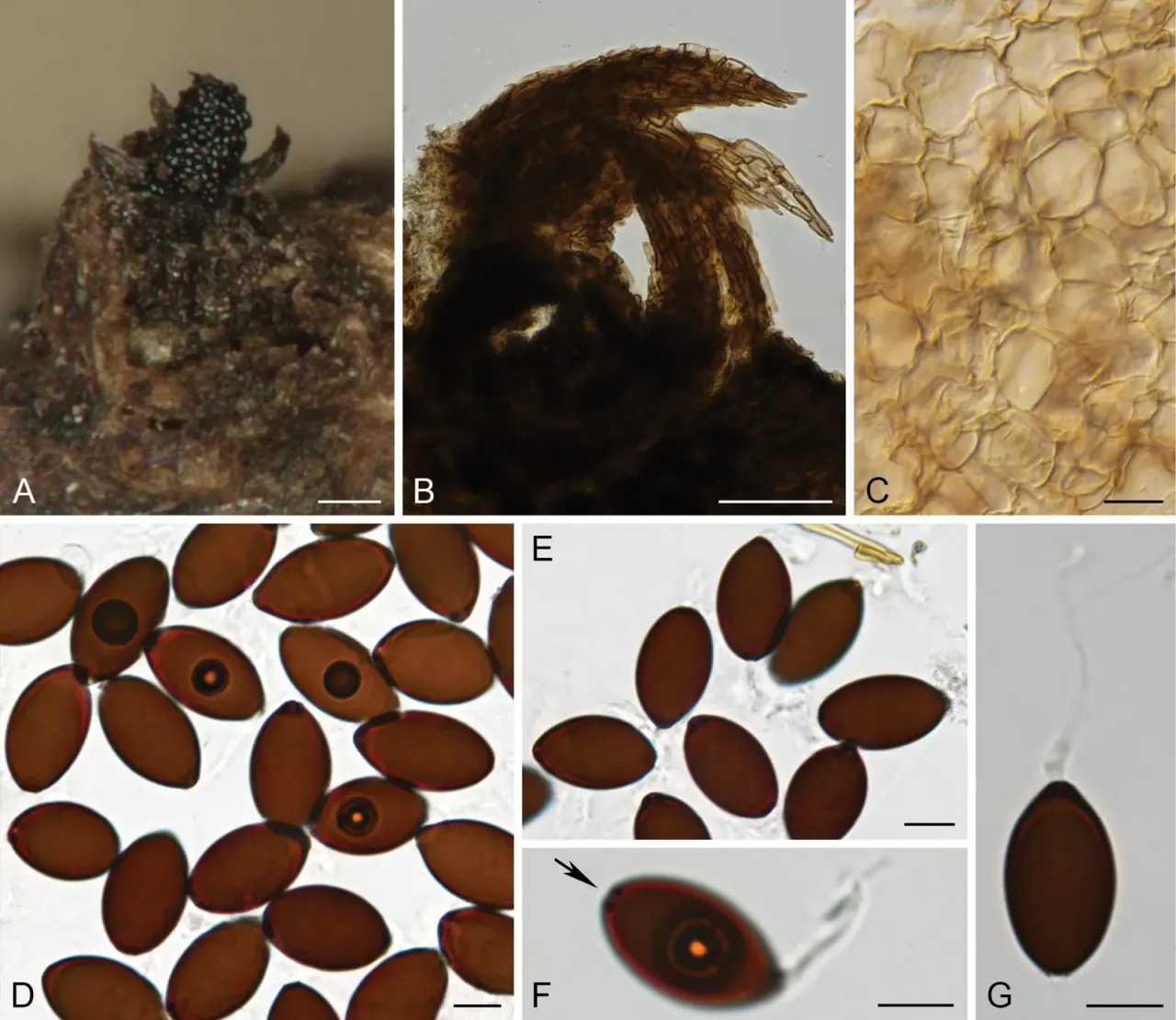
Ophiocordyceps gotrae — parasite of an adult wasp

Ophiocordyceps gotrae

Y.B. Wang, Z.M. Chen, H.F. Liao & Zhu L. Yang, 2026

Ophiocordyceps gotrae — parasite of an adult wasp

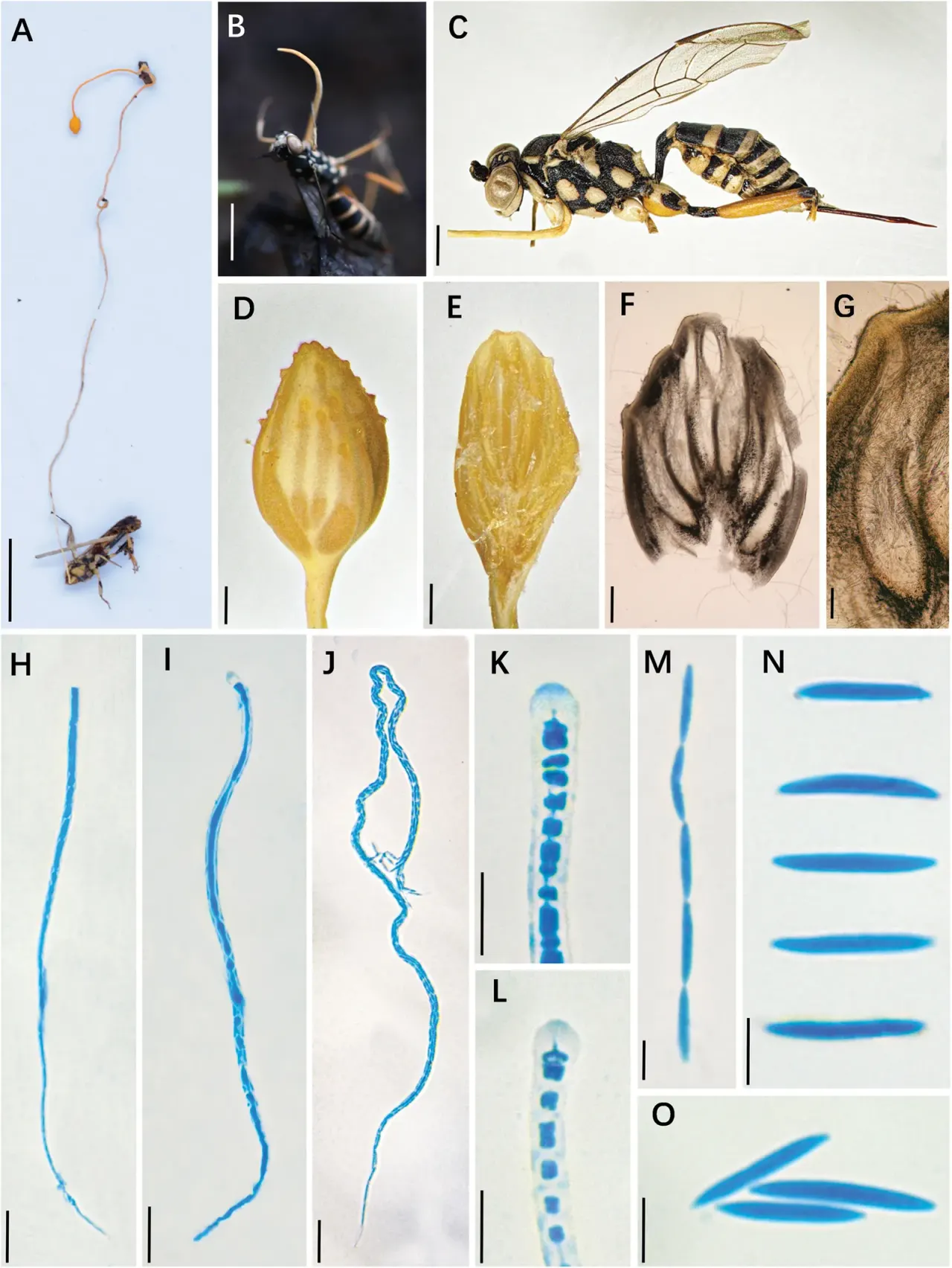
The new species from Yunnan grew out of an adult Gotra octocinctus lying in the leaf litter of a mountain forest.

Publication
Molecular phylogeny and morphology reveal two new species and one new record of Ophiocordyceps (Ophiocordycipitaceae, Hypocreales) parasitic on Hymenoptera in China
Habitat
Leaf litter on the floor of a montane forest in the Huanglian Mountains, Yunnan, at about 1,306 m.
Host
an adult wasp, Gotra octocinctus, Ichneumonidae
Etymology
The name refers to the host genus, Gotra.
Conservation
Not assessed — described in 2026.
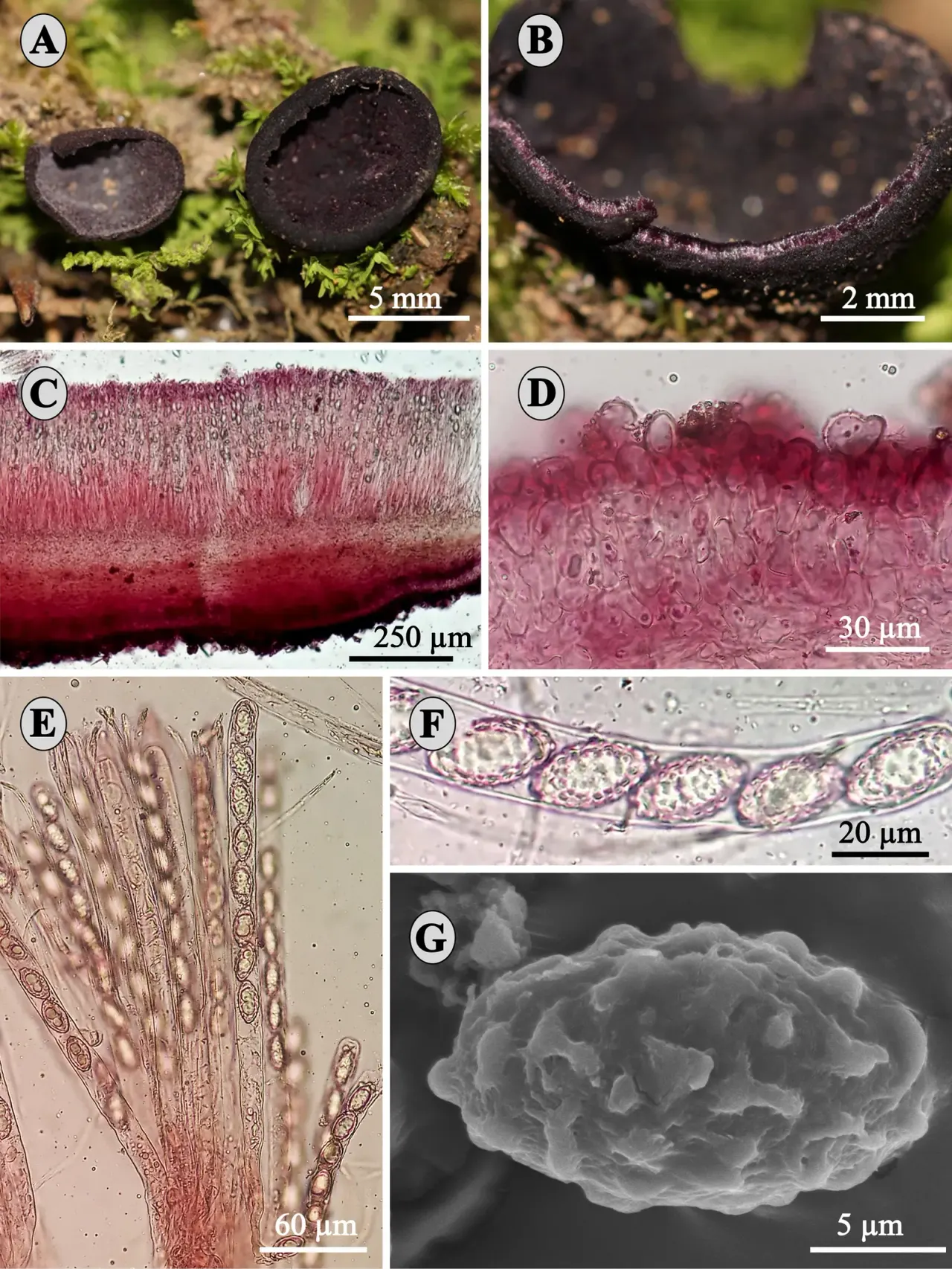
Schizothecium keniense — a new fungus from cow dung

Schizothecium keniense

Y. Marín & K. Harms, 2026

Schizothecium keniense — a new fungus from cow dung

The Kenyan species was described from coprophilous fruiting bodies, culture, four DNA markers and a profile of the metabolites it produces.

Publication
Pyrrospirone Z and related decahydrofluorene alkaloids produced by the new coprophilous species Schizothecium keniense
Habitat
Cow dung from near Egerton University; specimen PRM 964937 and culture CCF 6931.
Host
Cow — the association is with the coprophilous substrate, not parasitism.
Etymology
The name refers to Kenya, where the material came from.
Conservation
Not assessed — known from the material used in the 2026 description.
Smardaea perezsilvae from Monte Tláloc

Smardaea perezsilvae

Sánchez-Flores, J. García, Esqueda & Raymundo, 2026

Smardaea perezsilvae from Monte Tláloc

A cup-shaped fruiting body from high mountain forest has spindle-shaped, ridged spores and forms a distinct lineage in the Pyropyxidaceae.

Publication
Two new purplish species of Pezizales from the temperate forests of Mexico
Habitat
High-montane mixed forest on Monte Tláloc, Estado de México, 3,106 m; fruit bodies on soil.
Etymology
The epithet honours Dr Evangelina Pérez-Silva.
Conservation
Not assessed — known from the material used in the 2026 description.
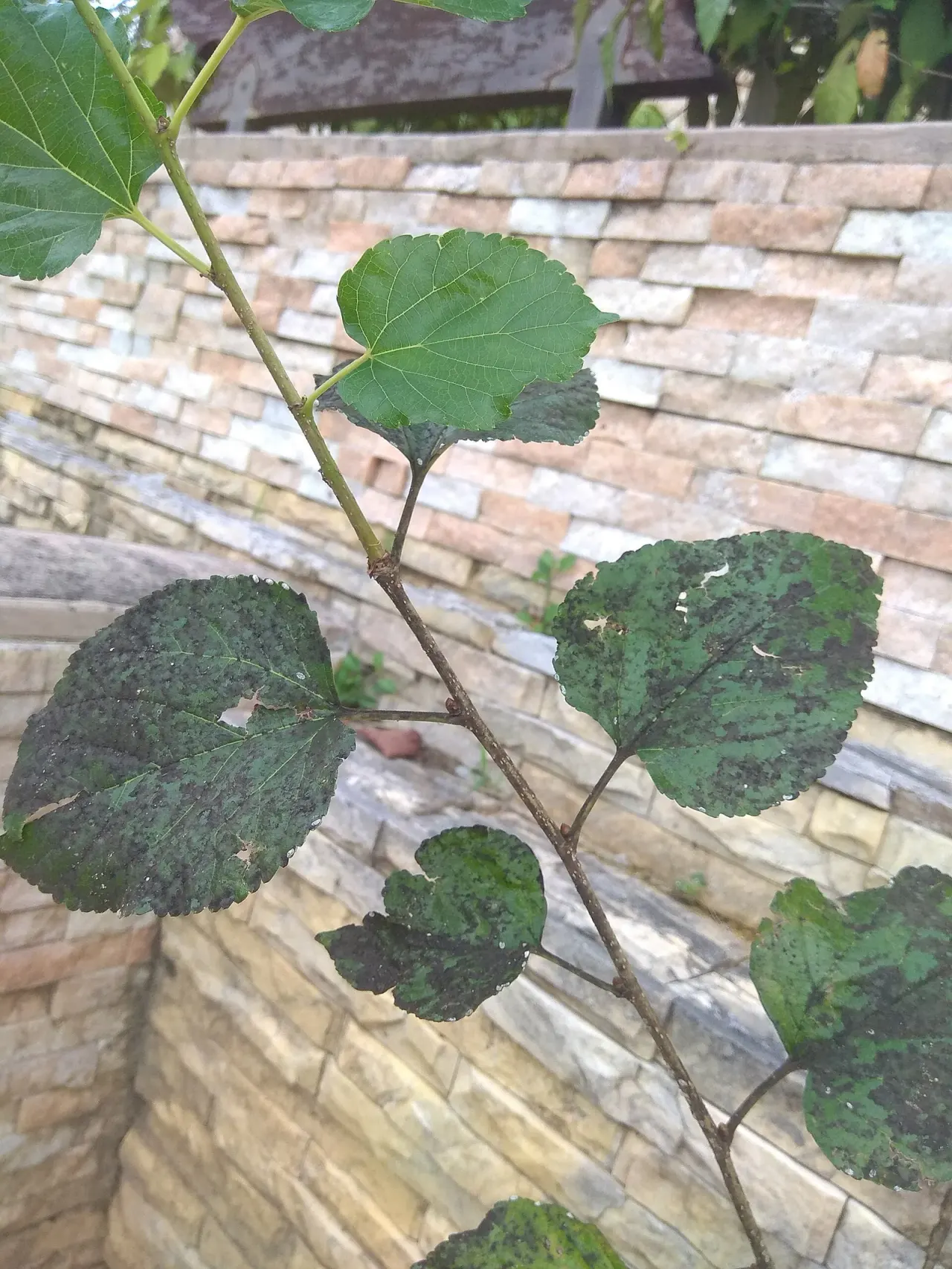
That black film on leaves is fungi too

Trichomerium guiyangense, T. xishuiense

Deng, Liu, Hongsanan i in., 2026

That black film on leaves is fungi too

Two new Trichomerium species were described from Guizhou. They form sooty coatings on the surface of living leaves without entering the tissue.

Publication
MycoKeys 137: 223-239
Habitat
The surface of living leaves, Guizhou Province, China.
Host
A leaf epiphyte feeding on honeydew rather than on plant tissue.
Etymology
The epithets come from the collecting localities, Guiyang and Xishui.
Three aquatic Distoseptispora from the Philippines

Distoseptispora antiqueana, D. iloiloensis, D. panayensis

Bagacay, Candole, Velo i in., 2026

Three aquatic Distoseptispora from the Philippines

Fungi that decay wood submerged in streams are a rarely studied group. A Philippine survey produced three new species at once.

Publication
MycoKeys 137: 103-137
Habitat
Wood submerged in fresh water, the Philippines.
Host
Decaying wood in streams, with no specialised host.
Etymology
The epithets come from places in the Philippines: Antique province, Iloilo city and Panay island.
Three new lichens told apart by a bloom

Sarcogyne bayingolinensis, S. parasitica, S. yiliensis

Liang, Wang, Hu i in., 2026

Three new lichens told apart by a bloom

Pruina, the white bloom on a thallus surface, turned out to deserve a survey of its own. It yielded three new Sarcogyne species.

Publication
MycoKeys 137: 175-197
Habitat
Rock substrates at sites in China.
Host
Lichens; S. parasitica lives parasitically on other lichens.
Etymology
The epithets come from places, Bayingolin and Yili; parasitica from the way of life.
Two new ascomycetes from the Yunnan-Guizhou Plateau

Minuticlypeus zunyiensis, Paravamsapriya yunnanensis

Yao, Liu, Li i in., 2026

Two new ascomycetes from the Yunnan-Guizhou Plateau

Minuticlypeus zunyiensis and Paravamsapriya yunnanensis were described from south-western China. Both belong to the order Xylariales.

Publication
MycoKeys 137: 241-255
Habitat
Dead twigs and wood, the Yunnan-Guizhou Plateau, China.
Host
A saprotroph on dead wood.
Etymology
The epithets come from the collecting localities, Zunyi in Guizhou and Yunnan province.
Two new species from dead wood, with an activity test

Chromolaenicola crataegicola, Paraphaeosphaeria fulva

Su, Tieliwadi, Zhang i in., 2026

Two new species from dead wood, with an activity test

Describing a new species rarely comes with checking what it produces. Here the authors did both at once.

Publication
MycoKeys 137: 43-67
Habitat
Decaying wood and woody litter, north-east China.
Host
A saprotroph on dead wood.
Etymology
crataegicola — dwelling on hawthorn; fulva — tawny, from the colour.
Two new yeasts from flowers in northern Thailand

Papiliotrema anthoicola, P. floralis

Kathongthung, Kodchasee, Singsalood i in., 2026

Two new yeasts from flowers in northern Thailand

Papiliotrema anthoicola and P. floralis were isolated from the flowers of five plants. A flower turns out to be a habitat with its own funga.

Publication
MycoKeys 137: 199-222
Habitat
Flowers of ornamental and wild plants, Chiang Mai Province, northern Thailand.
Host
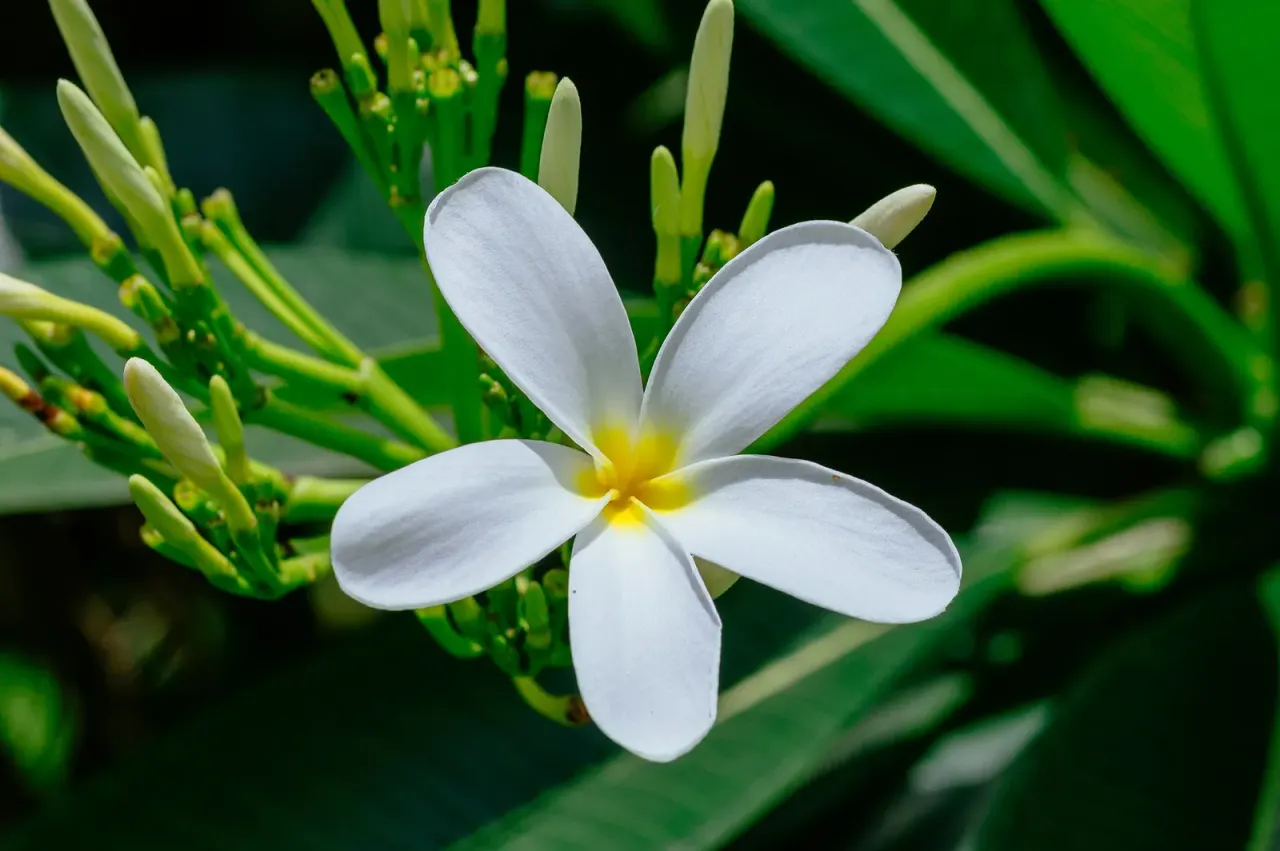
Allamanda cathartica, Bidens pilosa, Cananga odorata, Oncidium sp., Plumeria obtusa.
Etymology
anthoicola — dwelling in a flower; floralis — of flowers.
A new genus among arbuscular mycorrhizal fungi

Diversispora conica

Błaszkowski, Goto, Zubek, Milczarski, Malinowski, Niezgoda, Błaszkowski, 2025

A new genus among arbuscular mycorrhizal fungi

In 2025 a Polish team described the new genus Paracorymbiglomus and the new species Diversispora conica in the Glomeromycota.

Publication
MycoKeys 117: 171–190
Habitat
soil, in symbiosis with plant roots
Host
roots of plants forming arbuscular mycorrhiza
Etymology
The epithet conica refers to the conical spore shape described in the diagnosis.
New species found with bark and ambrosia beetles

Ophiostoma babimostense

Jankowiak, Solheim, Bilański, Kawa, 2025

New species found with bark and ambrosia beetles

Ophiostoma babimostense and Sporothrix europaea were described in 2025 from specimens associated with beetles in Poland and Norway.

Publication
MycoKeys 123
Habitat
Beetle galleries in wood in Poland and Norway; isolates associated with bark and ambrosia beetles.
Host
bark beetles and ambrosia beetles
Etymology
The name Ophiostoma babimostense refers to Babimost, where part of the material came from.
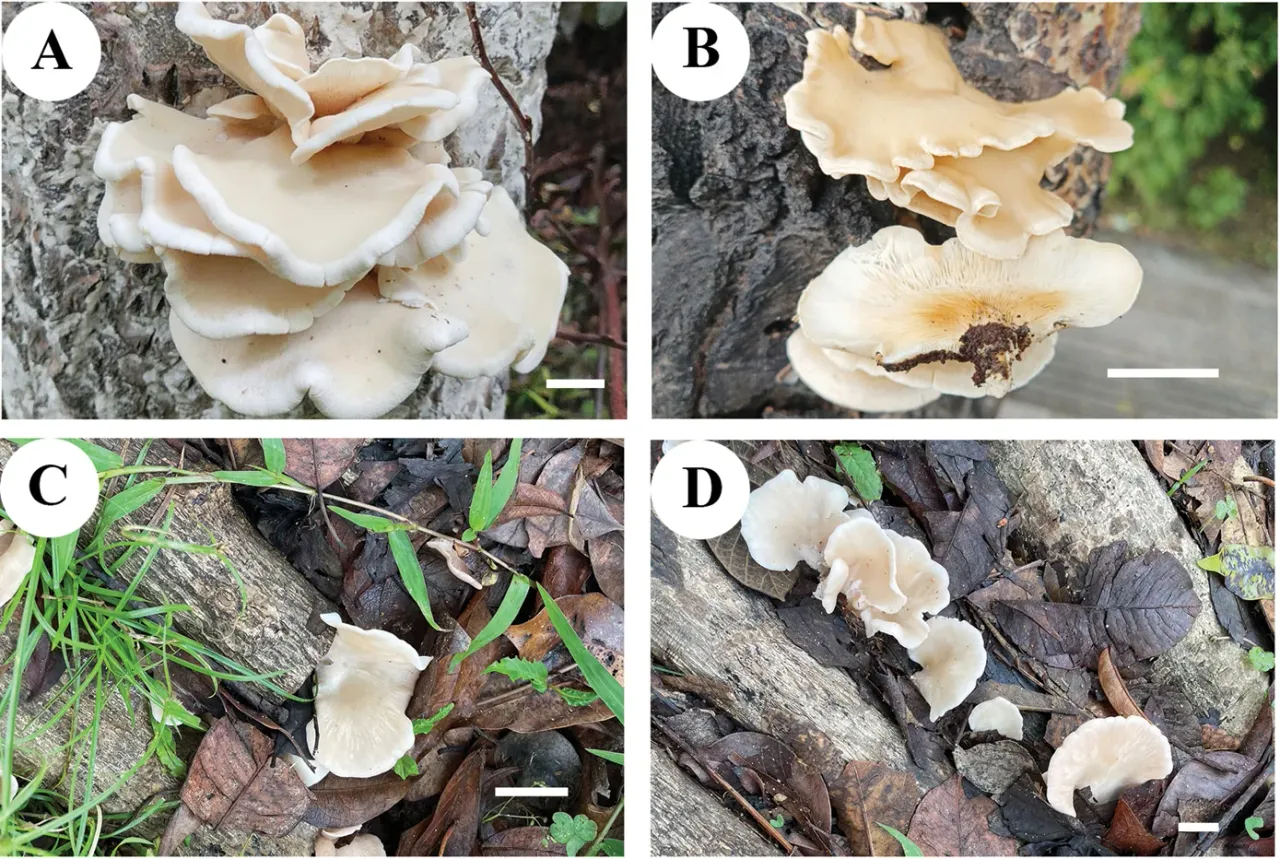
Pleurotus sinensis fruiting bodies in the field, including the type specimen

Pleurotus sinensis

L. Zeng, Y.F. Sun & B.K. Cui, 2025

Pleurotus sinensis: a new species among pinkish oyster mushrooms

A 2025 description separates some Chinese oyster mushrooms from the Pleurotus djamor complex. Fruiting bodies, microscopic characters and several DNA markers together support the distinction.

Publication
Zeng L, Xu Y-H, Wan L-L, Sun Y-F, Cui B-K (2025). MycoKeys 126: 119–133.
Habitat
Angiosperm trees and dead, decaying wood in temperate and subtropical China.
Etymology
The epithet sinensis refers to the Chinese origin of the studied specimens.
Conservation
The paper does not provide a formal IUCN assessment.
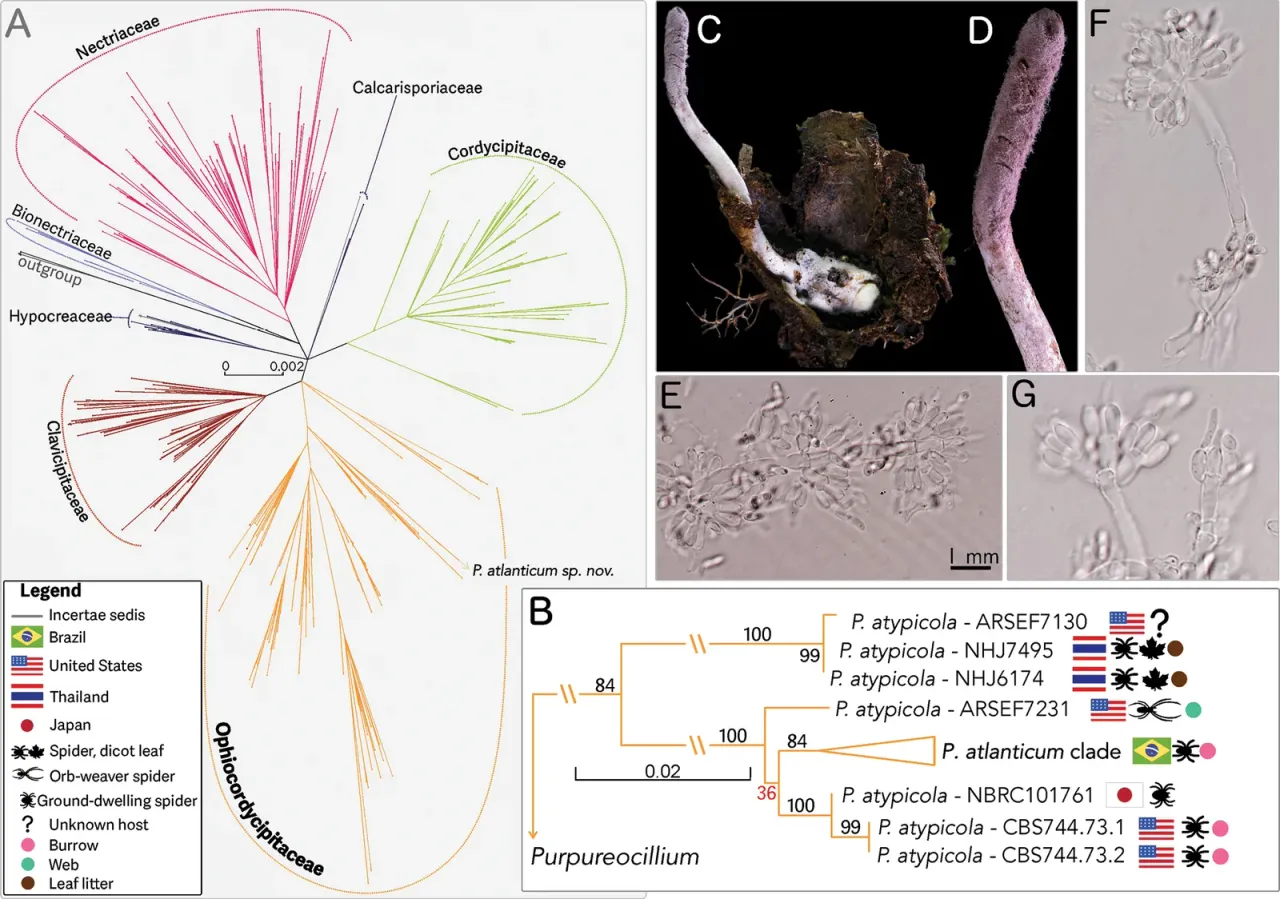
Purpureocillium atlanticum documentation: infected spider, spore-bearing structure and phylogeny

Purpureocillium atlanticum

J.P.M. Araújo, Martins-Cunha, Antonelli & Drechsler-Santos, 2025

Purpureocillium atlanticum: a fungus from a Brazilian spider burrow

Described in 2025, this fungus grows from a trapdoor spider hidden in the forest floor. Its description combines morphology with sequencing performed during fieldwork.

Publication
Araújo JPM et al. (2025). IMA Fungus 16: e168534.
Habitat
Spider burrows in the forest floor of montane Atlantic Forest near Nova Friburgo, Brazil.
Host
A trapdoor spider; the diagnosis does not assign a host species name.
Etymology
The epithet refers to Brazil’s Atlantic Forest.
Conservation
The authors propose Data Deficient (DD); they do not provide a separate formal IUCN assessment record.
Six new species from Polish broadleaf trees

Sporothrix cracoviensis

Ostafińska, Jankowiak, Bilański, Solheim, Wingfield, 2021

Six new species from Polish broadleaf trees

Work on broadleaf trees in Poland produced descriptions of six species new to science in the genus Sporothrix — one named after Kraków.

Publication
MycoKeys 82: Six new Sporothrix species from hardwood trees in Poland
Habitat
Bark and tissues of broadleaf trees in Poland; isolates obtained during research on wood-associated fungi.
Host
broadleaf trees, among them ash and oak
Etymology
The names commemorate features, places and hosts: cracoviensis — Kraków, resoviensis — Rzeszów, fraxini — ash.